Sunday, 3 January 2021

Top 5 cryptocurrencies to watch this week: BTC, ETH, DOT, BNB, UNI
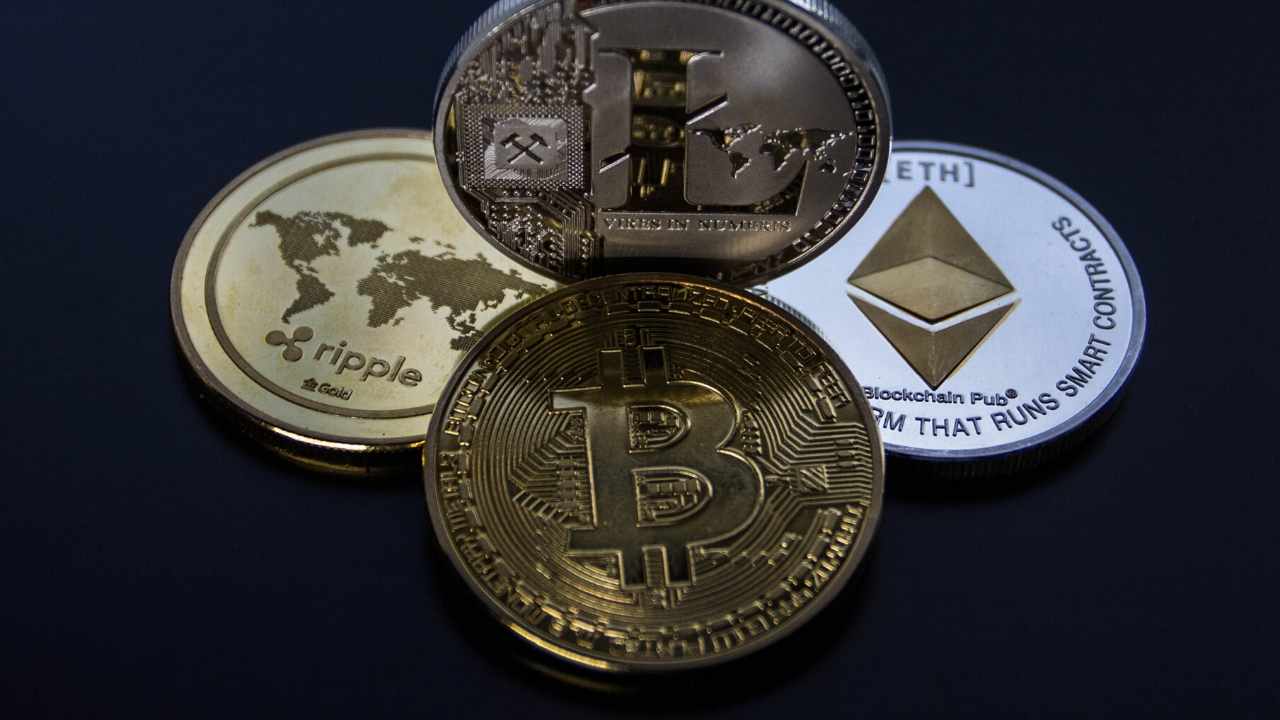
Top 5 cryptocurrencies to watch this week: BTC, ETH, DOT, BNB, UNI

Bitcoin (BTC) has consistently been hitting new all-time highs over the weekend, but the latest surge has also created a new high against gold, according to MarketWatch data. This suggests that Bitcoin has been gaining acceptance as the new store of value and that may attract more customers away from gold into Bitcoin. 

Analysts suggest that the latest rally above $30,000 could have been triggered by aggressive buying from institutional investors on Coinbase, as suggested by the large premium of about $350 compared to the price in Binance.

With the latest rally, Bitcoin hit a market capitalization of over $640 billion today, just shy of Alibaba, the ninth-largest company in terms of market cap, at $649.31 billion. Meanwhile, breaking $30,000 could be creating FOMO among institutional investors who have missed buying Bitcoin at lower levels.


Crypto market data daily view. Source:Coin360

However, this buying will need to sustain to keep the uptrend intact because if the rally stalls, some institutional investors and momentum traders who have purchased at lower levels may be tempted to book profits.

If that happens, it could pull the price down quickly and turn the recent purchases by investors into a loss, resulting in a rush to the exit. Therefore, traders must be cautious and employ proper risk management strategies to protect their paper profits.

Meanwhile, let’s look at the charts of top-five cryptocurrencies that could extend their up-move if the sentiment remains bullish

BTC/USD

Bitcoin broke above the $30,000 overhead resistance on Jan. 2 and picked up momentum, which could have been due to a short squeeze and continued buying from the momentum traders.


BTC/USDT daily chart. Source: TradingView

While a parabolic rally provides outsized returns within a short time, it also increases the possibility of a sharp reversal that may catch many traders off guard because after such a strong up-move, the price could retrace anywhere between 62% to 79% of the entire rally.

If that happens, the BTC/USD pair could drop to the $20,000 mark, or a drop of over 30%, which at the moment looks unimaginable.

In a melt-up, it is difficult to predict the level where the rally may end because traders continue to chase prices higher due to FOMO. The next technical level which may act as a resistance is $37,000.

Shorting a rally because it is overbought on all time frames could be a losing proposition because, during a blowoff top, the price could continue to remain overbought for much longer than most traders expect.

But traders who own long positions should use proper risk management principles to protect their paper profits and not get carried away by greed.


BTC/USDT 4-hour chart. Source: TradingView

The 4-hour chart shows that the bulls are buying on dips to the 20-exponential moving average. The bears have not been able to break the 50-simple moving average support since the price broke above $20,000.

Thus, the first sign of weakness will be a break below the 20-EMA. Such a move will suggest that traders may be booking profits after the sharp rally. A deeper correction below the 50-SMA may signal a possible change in trend.

There is a major resistance at $37,000 but if that is crossed, the rally could reach $40,000, which could again act as a stiff resistance.

ETH/USD

Ether (ETH) resumed its uptrend after a two-day minor correction on Jan. 2 and has followed it up with another strong up-move today. The upsloping moving averages and the RSI in the overbought territory suggest that the bulls are in command.


ETH/USDT daily chart. Source: TradingView

The bulls easily propelled the price above the $840.93 to $900 resistance today. The next resistance on the upside is $1,000. If the price turns down from this level, the bulls will try to defend the $840.93 breakout level.

If that happens and the ETH/USD pair rebounds off this support, the bulls will once again try to resume the up-move. On the other hand, if the bears sink the price back below $840.93, a drop to the 20-day EMA ($700) is possible.

A break below this level may be an indication that the pair may have topped out in the short-term.


ETH/USDT 4-hour chart. Source: TradingView

The 4-hour chart shows that the momentum picked up after the bulls pushed the price above the $840.93 resistance. The latest leg of the rally has pushed the RSI deep into the overbought zone, suggesting that a minor correction or consolidation could be around the corner.

The wick on the latest candlestick suggests profit-booking by traders near $975, but if the bulls do not give up much ground and the pair rebounds off $900, it will increase the possibility of a break above $1,000.

This bullish view will be invalidated if the pair turns down and breaks below the $840.93 support and the 50-SMA.

DOT/USD

Polkadot (DOT) is currently consolidating in a strong uptrend. The bears are attempting to defend the $9.50 overhead resistance while the bulls are buying on dips to the $7.89 support.


DOT/USDT daily chart. Source: TradingView

The DOT/USD pair closed in the red on Jan. 1 but the bulls made a strong comeback on Jan. 2. This shows that the traders are not waiting for a deeper correction to buy as they expect the prices to rally further.

If the bulls can propel the price above the $9.50 to $9.89 overhead resistance zone, the uptrend could resume with the next likely target at $12.29.

However, if the price turns down from the overhead resistance, the pair could remain range-bound for a few more days. The pair may lose its bullish momentum if the price slides and sustains below the $7.89 support.


DOT/USDT 4-hour chart. Source: TradingView

The 4-hour chart shows that the bulls are buying on dips to the 20-EMA. This suggests that the sentiment remains positive. The upsloping moving averages and the RSI in the positive zone suggest that bulls have the upper hand.

If the bulls can push and sustain the price above $9.50 for four hours, the next leg of the uptrend could begin.

However, if the price again turns down from the overhead resistance, the bears will try to sink the price below the 20-EMA. If they succeed, the momentum may weaken and the pair may remain range-bound between $7.89 to $9.50 for a few days.

BNB/USD

Binance Coin (BNB) resumed its uptrend today when the bulls pushed the price to a new all-time high at $41.5372. The upsloping moving averages and the RSI in the overbought zone suggest that bulls are in control.


BNB/USDT daily chart. Source: TradingView

The next target on the upside is $46 and then $50. This zone is likely to act as a stiff resistance.

However, the current breakout is facing profit booking above $40. If the bulls fail to sustain the price above $40, the BNB/USD pair may remain range-bound between $36 and $40 for a few more days.

A break below the 20-day EMA ($34.99) will suggest that the bullish sentiment has weakened and traders have started booking profits.


BNB/USDT 4-hour chart. Source: TradingView

The 4-hour chart shows that the bears are selling aggressively above the $41 levels, as seen from the long wicks on the latest two candlesticks.

If the price dips back below $40, it could find support at the 20-day EMA. A strong rebound off this level will suggest demand at lower levels and the bulls may again try to resume the uptrend.

Conversely, if the bears sink the price below the moving averages, it will suggest a possible change in the short-term trend.

UNI/USD

Uniswap (UNI) broke out of the $2.90 to $4 tight consolidation on Dec. 30 and surged to $5.29 on Dec. 31. The bears are currently attempting to stall the up-move at the $5.60 resistance but the positive sign is that the bulls have not given up much ground.


UNI/USDT daily chart. Source: TradingView

The upsloping 20-day EMA ($4.06) and the RSI above 67 suggest that the path of least resistance is to the upside. If the bulls can drive the price above $5.60, the UNI/USD pair could extend the uptrend and rally to $7.50 and then to $8.60.

Contrary to this assumption, if the price again turns down from $5.60, the pair may remain range-bound between $4.50 and $5.60 for a few days. The positive view will be refuted if the bears sink the price below the $4 support.


UNI/USDT 4-hour chart. Source: TradingView

The 4-hour chart shows that the price has broken out of the symmetrical triangle. If the bulls can sustain the breakout, the pair could start its journey to the pattern target at $6.

On the contrary, if the price slips back into the triangle, it could drop to the 20-EMA. A strong rebound off this support will indicate accumulation at lower levels and the bulls will once again try to resume the up-move.

This positive view will be invalidated if the pair turns down from the current levels and breaks below the triangle.

Title: Top 5 cryptocurrencies to watch this week: BTC, ETH, DOT, BNB, UNI
Sourced From: cointelegraph.com/news/top-5-cryptocurrencies-to-watch-this-week-btc-eth-dot-bnb-uni
Published Date: Sun, 03 Jan 2021 18:00:00 +0000


Top 5 cryptocurrencies to watch this week: BTC, ETH, DOT, BNB, UNI
Top 5 cryptocurrencies to watch this week: BTC, ETH, DOT, BNB, UNI was originally published here https://allthetopnews.blogspot.com/2021/01/top-5-cryptocurrencies-to-watch-this.html


Saturday, 2 January 2021

BTC cracks $30K, supply squeeze worsens, XRP implodes: Hodler’s Digest, Dec. 27–Jan. 2

BTC cracks $30K, supply squeeze worsens, XRP implodes: Hodler’s Digest, Dec. 27–Jan. 2


Title: BTC cracks $30K, supply squeeze worsens, XRP implodes: Hodler’s Digest, Dec. 27–Jan. 2
Sourced From: cointelegraph.com/magazine/2021/01/02/30k-cracked-supply-squeeze-xrp-implodes-1227-0102
Published Date: Sat, 02 Jan 2021 19:02:29 +0000


BTC cracks $30K, supply squeeze worsens, XRP implodes: Hodler’s Digest, Dec. 27–Jan. 2
BTC cracks $30K, supply squeeze worsens, XRP implodes: Hodler’s Digest, Dec. 27–Jan. 2 was originally published here https://allthetopnews.blogspot.com/2021/01/btc-cracks-30k-supply-squeeze-worsens.html

We need to bring community and sustainability back to the heart of Ethereum

We need to bring community and sustainability back to the heart of Ethereum

The core purpose for Ethereum at its birth was to herald the next generation internet. Its genesis was based on building a peer-to-peer network with no single entity or group in control by positioning the community at the center of the global system.

2020 has seen the power of this network thrive through innovative and industry-changing projects like Yearn.finance, Aave, Synthetix, Nexus Mutual and many others. In fact, the top 10 decentralized applications on Ethereum now attract more than 1 million users per month.

Many successful Ethereum-based projects are committed to or centered around the community, raising funds to eventually share with various stakeholders. But we have also seen the emergence of “get rich quick” schemes, locking up collateral as a result. More often than not, the community-based contributions are an afterthought explored in times of large growth.

Can we create a system that benefits community projects on an ongoing basis that is built into the core infrastructure of these protocols?

If we are to create such a network based on the original ethos for Ethereum, the community must now look to long-term sustainability that benefits the whole ecosystem over quick profits. In 2021, we have the power to deliver long-term solutions using advanced decentralized technology to build financial returns for the network into the infrastructure of our projects.

Related: Digital decentralization is just the beginning. The real world will follow

The rise of DeFi is welcomed but brings its complications

The meteoric rise of DeFi in 2020 has brought great promise and even greater investment to the industry. However, the booming interest in making a quick buck through new techniques like yield farming has afflicted the network with congestion and unsustainable projects. Some users that move large amounts of cryptocurrency are paying thousands in gas fees to transfer Ether (ETH), creating a financial barrier for many looking to use DeFi applications but not already possessing huge crypto holdings.

In some instances, projects have enjoyed a steep rise to glory followed by a sudden decline due mostly to an unsustainable or shortsighted business model that never really looked beyond the next exchange listing, fundraise or initial coin offering. While an increase in capital and interest flowing into Ethereum-based projects is a positive development, it is counterintuitive if projects fail to sustain themselves in the long term.

chieving sustainability: Eth2 and layer-two solutions

Many approaches and projects are aiming to make the Ethereum network scalable and more efficient using layer-two infrastructure including zero-knowledge rollups and optimistic rollups.

As Ethereum 2.0 begins to take shape, we must bring the community ethos back into the heart of the network and build financial returns into the underlying design that maintains the network and its infrastructure — this is where community-driven layer-two solutions are becoming increasingly important.

Related: Ethereum 2.0: Less is more… and more is coming

We can achieve this scalability by creating profitable projects that give back to the community as they scale and consistently return revenue for one, two or five years — not just after a successful bull run, ICO or fundraise.

Layer-two solutions that follow a proof-of-donation network not only resolve issues at the layer level, they also comply with the original mission that Vitalik Buterin initiated at the very beginning.

As a decentralized bidding mechanism, proof-of-donation reinvents the protocols and teams building projects that run on top of Ethereum.

This type of mechanism invites network coordinators to bid to win the right to create the next batch and collect transaction fees. A concept such as this comes alive when a percentage of earnings generated by the auction process are reinvested back into Ethereum-based community projects.

We need to build these funding mechanisms directly into layer-two infrastructure. This way, the entire community automatically benefits as the network operates, not only in times of rapid growth or high profits.

Looking forward

In summary, the Ethereum community must go toward creating long-term sustainable projects that benefit the whole community and the network over the quick profits.

The rallying price of Bitcoin (BTC) reached a historical record of $24,000 this month as Ether rallied to over $730, which caused the world to take notice as current financial systems continue to disappoint, exploit and exclude.

We now have the means and ability to create a sustainable network of decentralized applications that empower us all, not just a few elite. Let’s not waste this opportunity.

Title: We need to bring community and sustainability back to the heart of Ethereum
Sourced From: cointelegraph.com/news/we-need-to-bring-community-and-sustainability-back-to-the-heart-of-ethereum
Published Date: Sat, 02 Jan 2021 10:48:16 +0000


We need to bring community and sustainability back to the heart of Ethereum
We need to bring community and sustainability back to the heart of Ethereum was originally published here https://allthetopnews.blogspot.com/2021/01/we-need-to-bring-community-and.html

Friday, 1 January 2021

Cosmos developer: “We have never thought of ourselves as Ethereum killers”

Cosmos developer: “We have never thought of ourselves as Ethereum killers”

Cosmos is a network of blockchains that allow it to scale better. In a way, it is more similar to Polkadot than Ethereum, but the similarity among all three blockchains is that they support smart contract-using decentralized applications.

The common misunderstanding of Cosmos and even Polkadot is that these blockchain protocols are in direct competition with Ethereum.

Structurally, Cosmos is different from Ethereum in that it is an ecosystem of many smaller blockchains. This allows Cosmos to process data faster and more efficiently.

Ethereum looks to mitigate the scalability issues through Eth2, but a full rollout of Eth2 would take time. Eth2 also scales over time, as sharding and other technologies get released.

Cosmos can co-exist with Ethereum and this is optimistic

According to Jack Zampolin, Cosmos and Ethereum are complementary and can co-exist with one another.

This is optimistic for Cosmos because it means the smart contract market is not limited to one dominant player. Zampolin said:

“FWIW @cosmos and @ethereum are complimentary. I’m currently building a bridge between the two that will provide decentralized contract ownership and tools for Liquidity Providers on ETH #DeFi apps. We ( @cosmos ) have never thought of ourselves as EthKillaz™.”

Throughout 2020, Cosmos has seen rapid growth with the emergence of large-scale blockchain protocols within the ecosystem.

For instance, Binance Chain launched on top of Cosmos, which is worth about $5.5 billion as of January 1, 2020. It accounts for almost half of the valuation of the Cosmos ecosystem.

$BNB @binance #BNB
MktCap: ~$5.5B https://t.co/mOpbFRHew4
One of the first chains to adopt the @cosmossdk, exchange token for Binance

— Jack Zampolin (@jack_zampolin) December 31, 2020

Although it would take time for individual DeFi protocols and platforms to migrate to Cosmos, the network is seeing an emergence of widely-utilized blockchains, like BSC.


The price of Cosmos. Source: ATOMUSD on TradingView

DeFi is big enough for multiple ecosystems to co-exist

In the foreseeable future, analysts anticipate DeFi to expand to Cosmos, Polkadot, and other blockchain networks due to the high network fees on Ethereum.

With Eth2, Ethereum is expected to handle thousands of transactions per second. But, until Eth2 is fully deployed, Ethereum would continue to have scaling issues.

For instance, currently, it costs around $20 to process smart contract transactions on the Ethereum blockchain network. For transactions involving DeFi protocols, the gas can be higher due to staking.

Let’s say a user buys an asset with ETH, stakes it as a liquidity provider, unstakes it, and sells the rewards into ETH. The entire process would involve five transactions, so it would cost $200 total.

Scalability-focused blockchain networks would eliminate this pain point in DeFi, which is where Cosmos could prosper over the next coming months.

Analysts also expect the total value locked in DeFi to reach $100 billion, which would create the space for competition among blockchain networks in the DeFi space.

The post Cosmos developer: “We have never thought of ourselves as Ethereum killers” appeared first on CryptoSlate.

Title: Cosmos developer: “We have never thought of ourselves as Ethereum killers”
Sourced From: cryptoslate.com/cosmos-developer-we-have-never-thought-of-ourselves-as-ethereum-killers/
Published Date: Fri, 01 Jan 2021 18:23:38 +0000


Cosmos developer: “We have never thought of ourselves as Ethereum killers”
Cosmos developer: “We have never thought of ourselves as Ethereum killers” was originally published here https://allthetopnews.blogspot.com/2021/01/cosmos-developer-we-have-never-thought.html

Crypto derivatives gained steam in 2020, but 2021 may see true growth

Crypto derivatives gained steam in 2020, but 2021 may see true growth

2020 was the most important year for the crypto derivatives market so far. Both Bitcoin (BTC) and Ether (ETH) derivatives steadily grew throughout the year, with their futures and options products available across exchanges such as the Chicago Mercantile Exchange, OKEx, Deribit and Binance. 

On Dec. 31, Bitcoin options open interest reached an all-time high of $6.8 billion, which is three times the OI seen 100 days before that, signifying the speed at which the crypto derivatives market is growing amid this bull run.

The bull run has led to a lot of new investors entering the market amid the uncertainty that plagues traditional financial markets due to the ongoing COVID-19 pandemic. These investors are looking to hedge their bets against the market through derivatives of underlying assets like Bitcoin and Ether.

Institutional investors are bringing the key change

While there are multiple factors driving the growth of crypto derivatives, it’s safe to say that it has primarily been driven by interest from institutional investors, considering that derivatives are complex products that are difficult for the average retail investor to understand.

In 2020, a variety of corporate entities such as MassMutual and MicroStrategy showed considerable interest by purchasing Bitcoin either for their reserves or as treasury investments. Luuk Strijers, chief commercial officer of crypto derivatives exchange Deribit, told Cointelegraph:

“As Blackrock’s Fink put it ‘cryptocurrency is here to stay’ and bitcoin ‘is a durable mechanism that could replace gold.’ Statements like these have been the driver for the recent performance, however as a platform we have seen new participants joining the entire year.”

Strijers confirmed that as a platform, Deribit sees institutional investors entering the crypto space using trade instruments they are familiar with, like spot and options, which led to the tremendous growth in open interest throughout 2020.

The Chicago Mercantile Exchange is also a prominent marketplace for trading options and futures, especially for institutional investors, as the CME is the world’s largest derivatives trading exchange across asset classes, making it a familiar marketplace for institutions. It recently even overtook OKEx as the largest Bitcoin futures market. A CME spokesperson told Cointelegraph: “November was the best month of Bitcoin futures average daily volume (ADV) in 2020, and the second-best month since launch.”

Another indicator of institutional investment is the growth in the number of large open interest holders, or LOIHs, of CME’s Bitcoin futures contracts. A LOIH is an investor that is holding at least 25 Bitcoin futures contracts, with each contract consisting of 5 BTC, making the LOIH threshold equivalent to 125 BTC — over $3.5 million. The CME spokesperson further elaborated:

“We averaged 103 large holders of open interest during the month of November, which is a 130% increase year over year, and reached a record 110 large open interest holders in December. The growth of large open interest holders can be viewed as indicative of institutional growth and participation.”

The fact that the crypto derivatives market is now in demand is a sign of maturity for assets like Bitcoin and Ether. Similar to their role in the traditional financial markets, derivatives offer investors a highly liquid, efficient way of hedging their positions and mitigating the risks associated with the volatility of crypto assets.

Other macroeconomic factors are also pushing demand

There are several macroeconomic factors that are also causing the boost in demand for the crypto derivatives market. As a result of the COVID-19 pandemic, several large economies including the United States, the United Kingdom and India have been stressed due to limited working conditions and growing unemployment.

This has caused several governments to roll out stimulus packages and engage in quantitative easing to reduce the impact on the base economy. Jay Hao, CEO of OKEx — a crypto and derivatives exchange — told Cointelegraph:

“With the pandemic this year and many governments’ responses to it with massive stimulus packages and QE, many more traditional investors are moving into Bitcoin as a potential inflation hedge. Cryptocurrency is finally becoming a legitimized asset class and this will only mean a greater rise in demand.”

There is a growing interest from the mining community and other companies generating income in Bitcoin looking to hedge their future earnings so as to be able to pay their operating expenses in fiat currencies.

Besides institutional demand, there is a significant increase seen in retail activity as well, Strijers confirmed: “The unique accounts active on a monthly basis in our options segment keep rising. Reasons are overall (social) media attention to the potential of options.” The CME spokesperson also stated:

“In terms of new account growth, in Q4 2020 to date, a total of 848 accounts have been added, the most we’ve seen in any quarter. In November alone, 458 accounts were added. In 2020-to-date, 8,560 CME Bitcoin futures contracts (equivalent to about 42,800 bitcoin) have traded on average each day.”

Ether derivatives grow due to DeFi and Eth2

Apart from Bitcoin futures and options, Ether derivatives have also grown tremendously in 2020. In fact, the CME even announced that it will be launching Ether futures in February 2021, which in itself is a sign of the maturity that Ether has reached in its life cycle.

Previously, the crypto derivatives market was monopolized by products using Bitcoin as the underlying asset, but in 2020, Ether derivatives grew to take a significant share of the pie. Strijers further elaborated:

“When looking at USD value of turnover we see that on Deribit the BTC derivatives contributed the majority of volume, however the percentage has decreased from ~91% in January to ~87% in November. During the peaks of the DeFi summer, the BTC percentage dropped to mid seventies due to the increased ETH activity and momentum.”

The reason that Bitcoin derivatives make up a larger portion of the crypto derivatives market is that BTC is now well understood by the market and has received validation by large institutions, governing bodies and several prominent traditional investors. However, in 2020, there were several factors that influenced the demand for Ether derivatives as well. Hao believes that “The huge growth in DeFi in 2020 and the launch of ETH 2.0’s Beacon chain has definitely spurned more interest in Ether and, therefore, Ether derivatives.”

However, even though Ether is continuing its bull run alongside Bitcoin and will likely see a further increase in demand for derivatives, it’s highly unlikely that BTC will be overtaken any time soon. Hao further elaborated: “We will see rising demand for both of these products, however, BTC as the number-one cryptocurrency will likely see the steepest growth as more institutional dollars flood the space.”

2021 set to be a crucial year

Starting with the launch of CME’s Ether futures product in February, this year is set to be an even bigger year for crypto derivatives if the bull run continues. The market also recently witnessed the biggest options expiry yet, with nearly $2.3 billion worth of BTC derivatives expiring on Christmas.

With traditional markets, the derivatives market is several times larger than the spot market, but it’s still the opposite with crypto markets. So, it seems the crypto derivatives market is still in its nascent stage and is set to grow exponentially as the industry expands in size. As volumes increase, markets tend to become more efficient and offer better price discovery for the underlying asset, as Strijers added:

“Due to the overall increase in market interest, […] we see more market makers quoting our instruments, increasing our ability to launch more series and expiries, tightening spreads which acts as a fulcrum for further interest as execution becomes cheaper and more efficient.”

Apart from Bitcoin and Ether derivatives, there are altcoin derivatives products that are offered on various exchanges, most popularly perpetual swaps but also even options and futures. Hao elaborated further on these products and their demand prospects:

“Many other altcoins are already on offer to trade derivatives particularly in perpetual swap but also futures. […] The demand for this is largely driven by retail traders as some of these assets haven’t won over the confidence of institutional traders yet.”

Even though institutional investors are not flocking to the derivatives products of these altcoins just yet, that is set to change with the further growth of decentralized finance markets and the use cases that they can offer. Ultimately, this can translate into a rise in demand for more crypto derivatives in the near future.

Title: Crypto derivatives gained steam in 2020, but 2021 may see true growth
Sourced From: cointelegraph.com/news/crypto-derivatives-gained-steam-in-2020-but-2021-may-see-true-growth
Published Date: Fri, 01 Jan 2021 19:26:33 +0000


Crypto derivatives gained steam in 2020, but 2021 may see true growth
Crypto derivatives gained steam in 2020, but 2021 may see true growth was originally published here https://allthetopnews.blogspot.com/2021/01/crypto-derivatives-gained-steam-in-2020.html

Crypto adoption in 2021: Top trends and predictions on what may come

Crypto adoption in 2021: Top trends and predictions on what may come

Propelled by Bitcoin’s record-breaking rally, the crypto industry is seeing off 2020 with flying colors. Amid all the tumult of this unprecedented moment in history, the digital asset space seems to have proven its resilience, making a solid case for becoming a safe haven in an increasingly uncertain world. 

Among other advancements, the outgoing year saw the continued expansion of institutional and mass adoption. So, is this trend expected to continue in 2021, and what factors will shape the dynamics of crypto adoption across various sectors of the industry in the coming year?

The influx of institutional money

It has become somewhat commonplace to attribute at least a portion of Bitcoin’s (BTC) recent momentum to the effects of investment banks and hedge funds moving into the space en masse, yet, this trend doesn’t show any signs of dying down.

From the big-picture narratives dominating the circles where big money runs to fateful shifts in the political climate, there’s plenty of evidence suggesting that in 2021 big guns of traditional finance will be increasingly bullish on Bitcoin. Meltem Demirors, chief strategy officer of digital asset investment firm CoinShares, told Cointelegraph:

“The narrative shift around Bitcoin is so profound! Larry Fink in conference call with Mark Carney talking about Bitcoin as digital gold and saying he believes Bitcoin is the future; Guggenheim [Partners’ chief investment officer Scott Minerd] naming a price target of $400k. It used to be people in the industry making these bold calls, now it’s the establishment and titans of capital markets who allocate trillions of dollars in assets.”

Demirors further predicted that the incoming Democratic administration will facilitate the generation of even more money than has been created throughout 2020. With “$5 trillion of dry powder sitting on the sidelines waiting to be deployed,” all this money will need somewhere to go, providing fuel to cryptocurrency markets.

Dave Hodgson, chief investment officer of NEM Group, also considers the present U.S. monetary policy as a major driver behind institutional money flowing into Bitcoin: “If the U.S. continues to expand “quantitative easing,” or inflation, unabated, it seems like a sensible, even conservative, fiscal choice to diversify and BTC would be one of those natural homes for liquidity seeking shelter.”

The narrative that Bitcoin is gradually replacing gold as a hedge against inflation remains strong as well. Eric Richmond, chief operating officer of the cryptocurrency trading platform Coinsquare, observed to Cointelegraph: “Bitcoin will continue to emerge as the smart money alternative to gold with pension funds, family offices, hedge funds, macro investors and corporations allocating a portion of their portfolio to Bitcoin in 2021.”

Mass adoption

In 2020, cryptocurrency has become more accessible to retail investors than ever before, in part thanks to popular payment services like PayPal and Square making digitals assets available to their massive user base. Diversification of access points and increasingly intuitive interfaces will contribute to larger swaths of everyday users joining the ranks of crypto holders, traders and investors in the coming year.

Miles Paschini, founder and director of crypto investment app B21, shared with Cointelegraph his belief that 2021 will likely be the year during which mass adoption will begin, adding: “Tools for investors and payment system users will become more user-friendly and banks who previously shunned cryptocurrencies will begin to adapt and offer integrated services.”

In addition to existing tools and platforms, new offerings introducing the mass audience to crypto assets will continue to emerge. Facebook’s Diem is poised to become one of them, as Simon Peters, crypto market analyst with trading platform eToro, told Cointelegraph:

“Facebook has 2.7bn users across its suite of apps. Facebook’s Diem is due to launch in January 2021 and could provide a significant on-ramp for crypto. If Diem is listed on crypto exchanges, where it can be exchanged for bitcoin and other alt coins, this could encourage a whole new demographic to explore crypto.”

Peters added that, if it proves to be cheaper and easier to purchase crypto with Diem than with fiat, Facebook’s payment service could become yet another factor boosting mass adoption in 2021.

Decentralized finance

DeFi applications exploded in 2020 like no other sector of the crypto industry, and many experts foresee continued growth and growing public awareness of this space in the coming year. Erick Pinos, the Americas ecosystem lead at blockchain platform Ontology, told Cointelegraph that crypto enables its users to make money: “With decentralized exchanges, lending, insurance, derivatives, mutual funds, and more, the opportunities to make money in DeFi are endless.” Overall, Pinos expects that significant transaction volume and product development efforts over the next year will continue to be centered around DeFi.

At the same time, one major constraint on the growth of the DeFi sector is the regulatory pressure that will inevitably arise in the process of bridging the realms of traditional and decentralized finance. At first, this could introduce considerable tensions into the emerging field, but ultimately the payoff from compliance will be tremendous.

Lowering the barrier of access to DeFi protocols by making them user-friendly will also contribute to expanding the ranks of those who use these investment tools. Will Liu, head of decentralized protocol SAGA, predicted: “DeFi will be a more standardized and easy-to-use form in 2021 and I believe it will be a nice option for individual investors for a long time.”

Related: Artist, gamer or property mogul? Follow the NFT road to find earnings

Liu also thinks that other hot trends of 2020, most notably various use cases for non-fungible tokens, will keep gaining traction in the following year. For example, NFTs of digital and physical artworks will capture the attention of some of the big auctions, while NFTs for personal data protection will be benefiting from the ongoing evolution of data law.

Ethereum

DeFi activity has been enabled by the underlying Ethereum infrastructure, as a result, the 2020 DeFi explosion boosted the overall usage of the protocol. Meanwhile, the Ethereum community has been going through some notable milestones on its quest for perfecting its network this year, and the process was not always smooth.

Hodgson opined that the issues around network upgrades have led to some users experiencing a degree of “project fatigue,” resulting from uncertainty on Eth2 dates and scaling timescales. However, Hodgson argued that once these issues are sorted out, Ethereum will see an increased adoption outside of DeFi-related spikes. Richmond went on to add:

“Ethereum transacted over $1 trillion of value in 2020 and, as many new projects go live, this amount will grow in 2021. Ethereum supports all of the major crypto products such as stablecoins, de-fi, crypto lending and NFT applications. Since it is critical to the development of these products, investors will surely continue to adopt this asset to access these products.”

Uses beyond finance

According to some industry participants, the upcoming year will also yield critical gains in crypto adoption in contexts not directly related to monetary transactions. Healthcare tech could be one of the most obvious beneficiaries, as the pandemic-induced crisis has underscored the need for innovation in this space.

Chrissa McFarlane, CEO and founder of healthcare technology startup Patientory Inc., commented to Cointelegraph: “One of the solutions that more mainstream audiences have taken an interest in throughout 2020 is tokens that incentivize users to be healthy while providing them with access to their medical records.”

These accounts paint a picture of an industry that is poised to keep reaching more people and organizations in 2021 than ever before.

Title: Crypto adoption in 2021: Top trends and predictions on what may come
Sourced From: cointelegraph.com/news/crypto-adoption-in-2021-top-trends-and-predictions-on-what-may-come
Published Date: Fri, 01 Jan 2021 13:14:00 +0000


Crypto adoption in 2021: Top trends and predictions on what may come
Crypto adoption in 2021: Top trends and predictions on what may come was originally published here https://allthetopnews.blogspot.com/2021/01/crypto-adoption-in-2021-top-trends-and.html

Binance US To Delist Ripple Following The SEC Lawsuit: XRP Plunges Below $0.2

Binance US To Delist Ripple Following The SEC Lawsuit: XRP Plunges Below $0.2

The US branch of the leading cryptocurrency exchange Binance has joined the long list of trading venues that will remove the XRP token from its platform. At the same time, the asset has continued with its price drops as it struggles with the $0.20 level.

CryptoPotato reported a few weeks back that the US Securities and Exchange Commission has brought charges against Ripple alleging the company of conducting a $1.3 billion unregistered security offering.Although the payment processor claimed numerous times that the allegations were wrong, multiple crypto exchanges started delisting its native digital asset – XRP.After the first wave of delisting exchanges, the largest US-based platform Coinbase also delisted XRP. Earlier today, Binance US made a similar decision announcement as well.The US branch of Binance will delist XRP on January 13th, 2021, at 10 am EST. The exchange will also suspend trading and deposits. However, XRP withdrawals will not be affected at this time. The statement outlined that a withdrawal requires a tag / MEMO to complete the transaction.Despite the delisting, Binance said that eligible users will still be able to claim their Spark (FLR) airdrop tokens next year. The company will provide more details on how the distribution will take place.The SEC charges and the subsequent XRP removals from exchanges have caused severe harm to the token. Ripple’s native crypto lost about 70% of value in two weeks. Prior to the Binance US announcement, XRP had jumped to $0.24, but the news from the leading exchange has plummeted the token back to $0.20.

Another exchange down from the Ripple tree.Title: Binance US To Delist Ripple Following The SEC Lawsuit: XRP Plunges Below $0.2
Sourced From: cryptopotato.com/binance-us-to-delist-ripple-following-the-sec-charges-xrp-plunges-below-0-2/
Published Date: Thu, 31 Dec 2020 09:31:16 +0000


Binance US To Delist Ripple Following The SEC Lawsuit: XRP Plunges Below $0.2
Binance US To Delist Ripple Following The SEC Lawsuit: XRP Plunges Below $0.2 was originally published here https://allthetopnews.blogspot.com/2021/01/binance-us-to-delist-ripple-following.html

These symbols saw the biggest trading quantity pumps last week. Exactly how could traders profit?

  Significant boosts in trading quantity can signal crypto financiers to cost highs that are yet to find. An uptick in trading volume is amo...